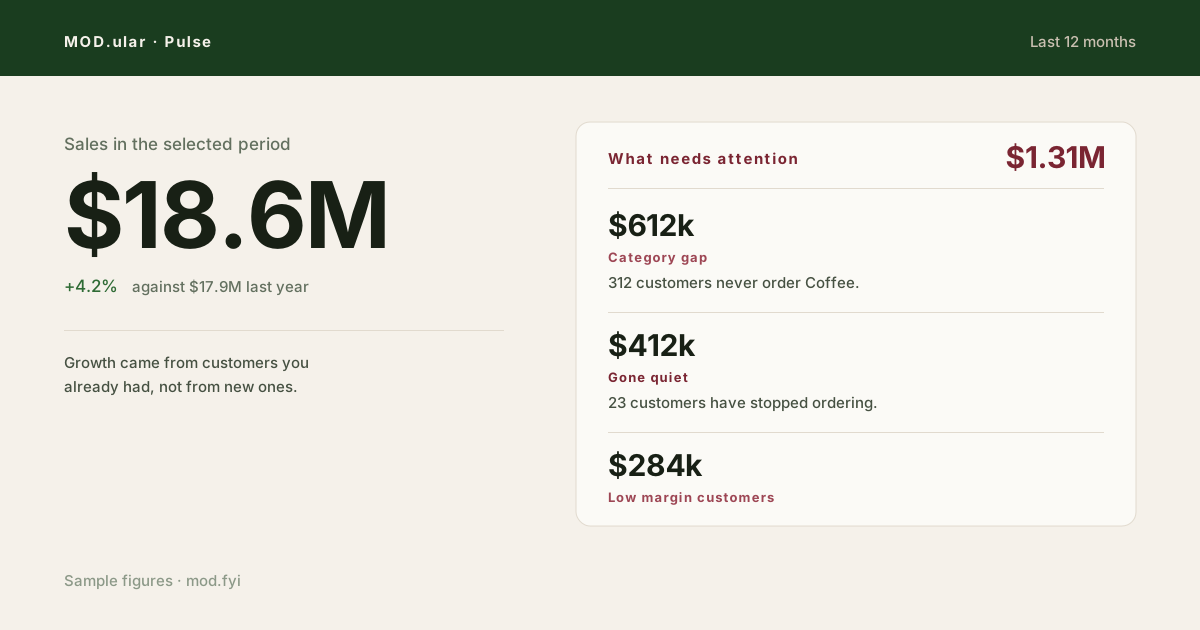
Two things shipped this month, and they have the same idea behind them: your Pepperi already holds more than it shows you. Neither add-on asks you or your customers to enter anything new.
MOD.ular reads your invoice history
Your ERP has been feeding Pepperi since the day you went live — customers, prices, orders, and every invoice you have raised. MOD.ular reads what is already there and works out the things nobody has time to go looking for: who has gone quiet against their own ordering rhythm, who costs more to deliver to than their orders earn, and who has drifted onto a discount nobody would sign off today.
The dashboard above is the real screen on sample figures. Every chart closes with a line saying what it found and what to do about it, so you are never left deciding whether a picture is good news.
MOD.inbox reads the orders that arrive as messages
Your customers already order by email, WhatsApp, voice note and photo, and somebody on your team reads, interprets and rekeys every one of them. MOD.inbox matches each line against your own Pepperi catalog and turns the message into an order.
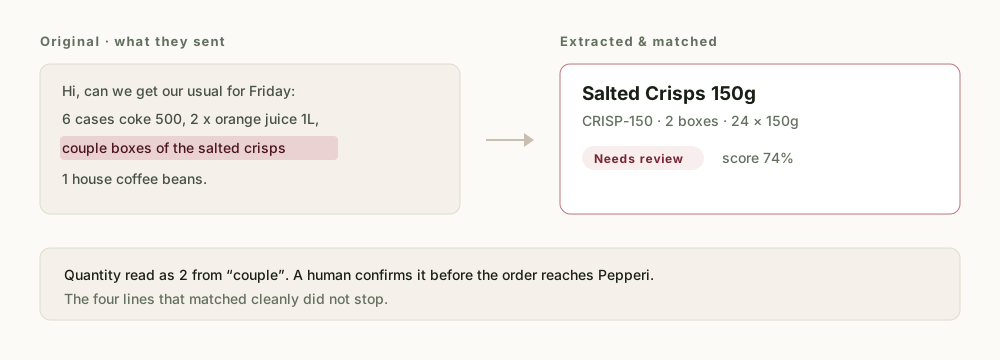
The line that says "couple boxes" is the interesting one. It is never guessed: it stops in the review queue with the original message beside it, and a person decides. The lines that matched cleanly do not stop.
From the pattern library
Each issue carries one pattern from the library we have built across 150+ implementations. This month, the one both add-ons lean on.
Last-order memory
A rep opening an account sees what that customer actually bought last time, in the order they bought it. It is the cheapest way to make a call shorter and an order bigger, and it is configuration rather than development.
Browse the pattern libraryBoth add-ons are switched on per company, and if you are already a customer your data is already in place. The first time you see either one, it is your own numbers on the screen.